Bedding guide
How to Choose a Thin Duvet Insert for Warm Sleepers
A comfortable bed does not have to feel like a cocoon. The right thin duvet insert can offer a light, breathable layer that takes the chill off without leaving warm sleepers tossing the covers aside. Focus on the fill, construction, shell fabric, and the conditions in your bedroom—not just a label that says “lightweight.”
Some sleepers know the nightly routine by heart: pull up the duvet, warm up, push it away, then reach for it again before morning. If you tend to sleep hot, or your bedroom stays warm through much of the year, a substantial comforter may feel like too much. A thinner insert can be a more comfortable middle ground: enough coverage to feel settled, without the weight and heat of a winter-ready bed.
But “thin” is not a precise technical category. One insert might feel flat and crisp; another can look full and airy while weighing relatively little. Fill type, quantity, loft, stitching, shell fabric, and duvet-cover choice all influence the final feel. Reading those details helps you choose a duvet insert for hot sleepers with more confidence—and avoid assuming that an airy appearance necessarily means low warmth.
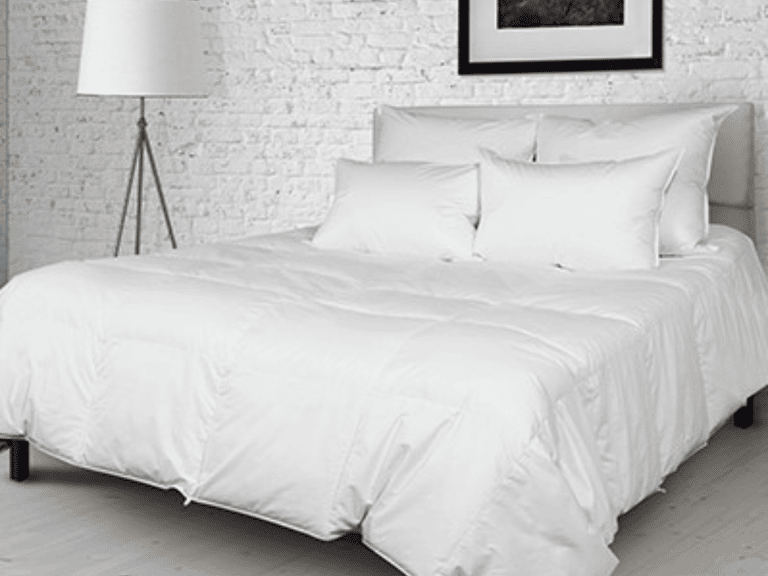
Naturepedic’s down duvet insert offers a useful example of the specifications worth comparing. Its product information describes a lightweight option filled with 600-fill-power white duck down, a down-proof organic cotton shell, and stitch-through box construction. Those details help explain how to evaluate a thin down duvet insert, while also illustrating why warmth level and construction should be considered together.
What does “thin duvet insert” really mean?
In everyday bedding language, thin usually means a lower-profile or less substantial-feeling insert. It may contain less fill than a winter-weight comforter, sit closer to the body, or create less visual loft on the bed. Yet thickness alone cannot tell you exactly how warm it will feel. Two inserts of similar height can differ in insulation depending on their filling and how effectively that fill traps still air.
Down and other insulating fills work by holding pockets of air. That trapped air slows heat loss, helping a layer feel warm even when the fill itself is light. A lofty down insert may look exceptionally full without being the heaviest choice, while a flatter, densely packed layer can feel more substantial than its profile suggests. The material and amount of fill matter, as does the way it is distributed inside the shell.
That is why it helps to treat “thin” as a comfort goal rather than a standardized measurement. You may be looking for a low, neat profile, a lighter covering, reduced warmth, or all three. Decide which matters most before comparing products. Someone who dislikes the feeling of weight may care more about total fill and overall drape; someone who overheats may need to prioritize a lower warmth rating and breathable bedding layers.
Start with your sleep temperature and bedroom climate
Your own sleep patterns are often a better guide than the season printed on a product label. A warm sleeper in an air-conditioned room may need a different level of insulation from a cool sleeper in a naturally temperate bedroom. Consider whether you wake up hot, whether you share body heat with a partner, and whether your room temperature changes significantly overnight.
Think about your bedding as a system, too. A duvet insert sits beneath a cover and may be paired with sheets, a blanket, or a mattress protector. Each layer can affect how warm the bed feels. If you already use flannel sheets or a dense duvet cover, a very warm insert may be unnecessary. Conversely, a thin insert might feel just right when paired with breathable, lighter layers.
- For consistently warm rooms: Look for a summer-weight or explicitly lightweight option, and avoid choosing by loft alone.
- For variable temperatures: Consider a light insert that can be paired with a separate blanket on cooler nights.
- For shared beds: Think about whether both sleepers prefer similar warmth; separate blankets or adjustable layers can help when preferences differ.
- For a cool room but a hot sleeper: A breathable, lower-warmth insert may be more comfortable than simply removing the cover altogether.
Temperature comfort is personal, so no fill or weight category guarantees the same experience for everyone. Room humidity, bedding materials, clothing, mattress characteristics, and individual heat regulation can all play a part. Use product specifications to narrow the choices, then weigh them against what has made your bed feel too warm in the past.
Fill weight: the amount inside the duvet
Fill weight is the total weight of insulating material in an insert, often listed by size. It gives you a useful clue about how much filling is present, but it is not a direct warmth score. A larger duvet typically needs more fill simply because it covers more surface area. For a meaningful comparison, compare the same size and check whether the listed weight refers to the fill alone or the entire product.
When a maker does not publish fill weight, look for a clearly identified warmth category—such as summer, lightweight, all-season, or winter—and review the construction and material information. Product names can be helpful, but they are not universal standards. A “light” option from one collection may not match a similarly named insert from another company.
It is also useful to distinguish fill weight from total product weight. The finished insert includes the outer shell, stitching, and other construction details. A heavier shell or more elaborate design can add weight without adding much insulating fill. If you are especially sensitive to pressure or bulk, seek a product specification that clearly separates the filling from the complete duvet weight.
For a thin duvet insert, the goal is not automatically to find the smallest number. Instead, look for an amount of fill that suits your climate and comfort preference, then consider how that fill is arranged. A deliberately lightweight design can still provide a soft, enveloping layer; it simply avoids the excess insulation that may make a warm sleeper uncomfortable.
Fill power explains loft—not the whole warmth story
Down products may list fill power, a measure related to the loft produced by a given weight of down under a standardized test. In broad terms, higher fill power means the down can occupy more space for the same weight. That can make an insert feel lofty and light, but fill power by itself does not tell you how warm the finished duvet will be.
For example, an insert with higher-fill-power down can still be designed for a light warmth level if it uses a modest amount of fill. Another insert with a lower fill-power rating may feel warmer if it contains more material or is built for colder conditions. Warmth is influenced by the combination of fill power, fill quantity, size, construction, fabric, and the product’s intended use.
Naturepedic’s lightweight duvet insert is described as using 600-fill-power white duck down. That figure is one helpful point of comparison, not a promise that the insert will suit every sleeper or room. Read it alongside the listed warmth category, the shell fabric, and the construction. If you are comparing several products, keep size and intended warmth as consistent as possible so that the specifications are more meaningful.
In short, fill power helps describe how efficiently down lofts; it does not replace the warmth label or tell you the complete feel. Treat it as one part of the decision rather than a simple ranking where the highest number always wins.
Construction affects loft, coverage, and cold spots
The way an insert is sewn determines how its fill is contained and distributed. In stitch-through construction, the top and bottom shell fabrics are sewn together at intervals, creating separate compartments. This can help keep fill from migrating and is often used in lighter-profile designs. At the seam, however, there is less insulating material than in the center of a filled section, so the pattern and spacing are worth noting.
Baffle-box construction uses internal fabric walls to create three-dimensional compartments. Those walls allow the fill to loft more fully and can help maintain a higher, more even profile. Baffles are frequently found in designs where substantial loft is a priority, though construction alone does not determine whether an insert is lightweight or warm. Fill amount and the product’s intended warmth remain central.
Naturepedic’s example uses stitch-through box construction, described as helping keep the down evenly distributed and supporting balanced loft. This detail illustrates a useful question for any insert: how does the design limit shifting, clumping, or uneven coverage? Consistent distribution can make an insert feel more comfortable because the fill is less likely to gather at one end or leave conspicuously thin areas.
Check the compartment pattern and any practical securing details. Corner loops or ties can help attach an insert to a duvet cover and reduce bunching during the night. A well-matched cover also helps the insert lie smoothly. These finishing details will not turn a winter comforter into a summer one, but they can make a light duvet easier to use and more comfortable in everyday life.
Shell fabric: the layer you feel against your cover
The shell is the fabric that contains the fill. It needs to be tightly woven enough to help keep the filling in place, yet its hand and breathability contribute to the overall experience. Cotton is a common choice; cotton sateen, percale, and other weaves can feel different against the skin. A duvet cover will sit over the shell, but the insert’s fabric can still affect how it handles, breathes, and moves.
A down-proof shell is designed to help prevent fine down from escaping through the fabric. The phrase describes a functional construction goal; it does not mean the shell is completely impervious to air or moisture. If you tend to sleep hot, consider the shell material alongside the duvet cover and sheets. A breathable set of layers may feel more comfortable than a heavy, dense combination.
Naturepedic’s lightweight down insert is described with a 100% organic cotton shell. The specification may interest shoppers who value cotton or want to review the product’s stated certifications. Its product information also lists GOTS and Fair Trade Certified cotton shell claims. Certifications apply to defined standards and parts of a product, so review the exact scope and current product documentation if those claims are important to your decision.
Do not assume that a particular fiber guarantees a cool night. Weave, fabric weight, room conditions, and the rest of your bedding all matter. But comparing shell information can help you understand why two inserts with similar fill descriptions may feel different in use.
Down, down blends, and alternatives
Down is prized for its lightness and loft, which can provide warmth without the dense feel of some heavier fillings. A thin down duvet insert may suit people who want a cushioned, airy layer but do not want a bulky comforter. Down is not the only option, however. Wool, recycled polyester, and other synthetic fills have different handling and care characteristics.
Down alternatives may appeal to people who prefer not to use animal-derived fill or want a particular care routine. Their performance varies by material and construction, so compare the finished warmth and stated fill details rather than assuming all synthetic inserts feel the same. Wool can offer a different kind of weight and temperature experience, and is not necessarily interchangeable with a light down insert simply because both are natural fills.
Down blends and specialty blends also deserve close reading. A product name may emphasize down even when the filling combines down with another fiber. Check the stated proportions and intended benefit. Some blends are designed to change the feel, moisture handling, or loft; those details may matter if you are selecting bedding for allergies or specific comfort needs.
For animal-welfare or environmental considerations, seek clear sourcing information and understand what any certification covers. Product claims can differ in scope, and a certification for a shell fabric does not automatically certify the fill. The most useful comparison is a transparent one: identify the material, its origin where provided, the relevant standard, and the care required to keep the insert in good condition.
Care matters when choosing a light duvet
A thin insert may be easier to manage than a bulky winter comforter, but care still depends on its filling, shell, and maker’s instructions. Some down products can be washed carefully; others recommend spot cleaning or professional care. Always follow the specific label and product guidance rather than applying a general rule to every down duvet.
Naturepedic lists a cold, gentle machine-wash cycle and low tumble drying for its lightweight insert. If you choose a product with similar care instructions, make sure your washer and dryer can accommodate the duvet without crowding. An overloaded machine may not clean or rinse evenly, and a large insert can take considerable time to dry completely. Follow the manufacturer’s directions for detergent, temperature, and drying, and ensure the fill is thoroughly dry before putting the insert away.
A duvet cover is a practical first line of protection against everyday soil. It can reduce the frequency of washing the insert itself, while corner ties or loops help keep the layers aligned. Regularly airing the bed and following the recommended cleaning schedule can also help maintain freshness. Avoid storing an insert while damp, and use breathable storage rather than compressing it for long periods unless the maker says that is suitable.
Before buying, consider whether the care routine fits your household. A product that feels ideal but is inconvenient to clean may not be the best everyday choice. Clear care information is part of a useful comparison, just like fill power and construction.
A practical checklist for comparing thin duvet inserts
When product descriptions sound similar, a short checklist can help bring the decision back to the features that affect comfort. Compare like with like: the same bed size, similar warmth category, and a consistent understanding of whether weights refer to fill or the whole product.
- Warmth level: Is it specifically described as summer-weight, lightweight, or suitable for warm sleepers?
- Fill type: Is it down, a down blend, wool, or synthetic fill? Are the proportions clearly stated?
- Fill amount: Is fill weight listed for your size, or is there another clear measure of the product’s intended warmth?
- Fill power: If down is used, what is the rating—and how does it relate to the stated warmth category?
- Construction: Is it stitch-through, baffled, or otherwise compartmentalized to help distribute the fill?
- Shell: What fabric contains the fill, and is it described as down-proof or otherwise suited to the filling?
- Fit: Does the insert match your duvet cover dimensions, and are there loops or ties to reduce shifting?
- Care: Can you realistically follow the washing and drying instructions at home?
- Certifications and sourcing: Are claims specific, and do they apply to the fill, shell, or entire product?
Naturepedic’s lightweight insert can be assessed using this framework: its described features include 600-fill-power white duck down, an organic cotton shell, stitch-through box construction, and a cold gentle wash with low tumble drying. These are comparison points, not a substitute for considering your climate, sleep habits, and personal preference.
Common mistakes when shopping for a light duvet insert
Choosing only by the word “lightweight.” Labels are useful shorthand, but brands may define warmth categories differently. Read the full specification and see whether fill amount, size, or season is provided.
Assuming higher fill power means a warmer duvet. Fill power describes loft potential for a given amount of down. The quantity of fill and the construction also influence the finished warmth and feel.
Ignoring the cover and other bedding. A heavy duvet cover or warm sheets can make even a modest insert feel hotter. If you are already overheating, reviewing the whole bedding setup may be as important as changing the insert.
Comparing different sizes as if the numbers were equivalent. A king insert will usually contain more material than a twin. Compare the same size when evaluating fill weight or total weight.
Buying a lower profile when you actually need less warmth. Thinness and insulation are related but not identical. A sleek-looking insert may still be warm, and a lofty insert can feel light if it uses highly efficient fill in a modest amount.
Skipping the care instructions. A washable duvet can be convenient, but only if its size and drying requirements work for your laundry setup. Check the guidance before making a decision.
The bottom line: choose the feel, then verify the details
The best thin duvet insert is not simply the flattest or lightest one on the shelf. It is the layer that gives you enough coverage to feel comfortable without adding more insulation than your sleep habits call for. Start with your bedroom temperature and your own experience, then compare warmth category, fill quantity, fill power, construction, shell fabric, and care requirements.
A product such as Naturepedic’s down duvet insert shows how those details work together: a stated lightweight option, 600-fill-power white duck down, an organic cotton shell, and stitch-through box construction. Use those specifications as a model for the questions to ask—not as a guarantee that one design will feel the same for every sleeper.
For warm sleepers, thoughtful layering is often the simplest route to a more comfortable bed. A lighter insert, breathable cover, and flexible extra blanket can offer options as the room changes. With a little attention to the details behind the label, you can choose a duvet that feels airy and inviting instead of bulky and too warm.